Require capture
A platform routes photo evidence through the ARGUS SDK instead of ordinary upload.
Capture provenance SDK
Argus is a B2B SDK and verification layer for photo-evidence workflows in the age of AI.
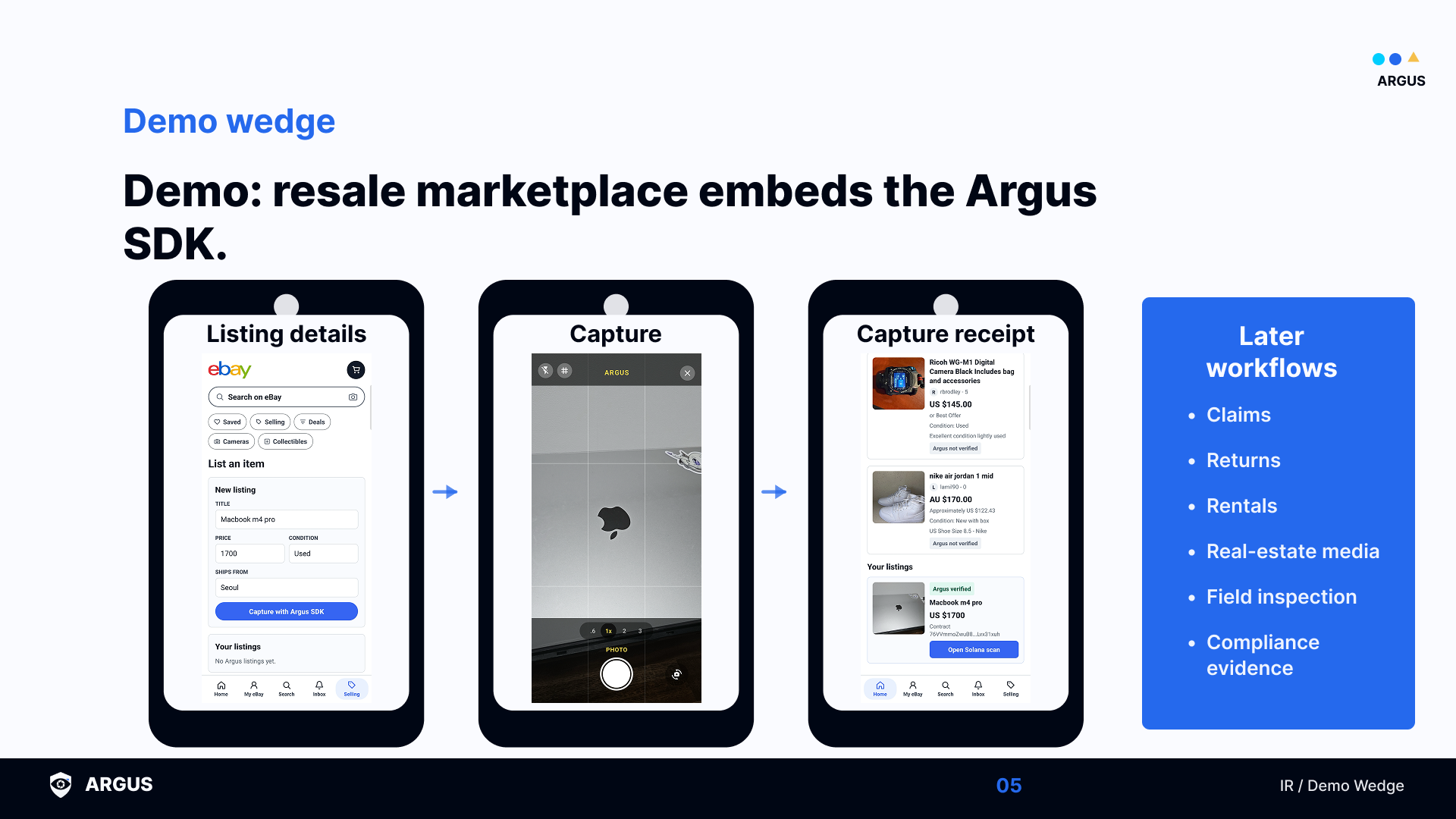
A partner app embeds Argus, the user captures through native Android instead of uploading from gallery, the relayer validates the proof bundle, and Solana stores a compact receipt with proof ID, hashes, status, and authorized relayer identity. The first wedge is resale marketplace listing integrity, with expansion to returns, claims, rentals, inspections, and other workflows where photos affect money, approval, or trust.
Watch ARGUS
Start with the investor narrative, inspect the system design, then watch the marketplace proof flow end to end.
 IR Presentation Deck The product, market, and business case. A concise investor-style walkthrough of the AI-photo trust problem, marketplace wedge, Solana receipt layer, and ARGUS business path. Watch IR presentation
  Technical Overview Deck The SDK, relayer, registry, and verifier path. A technical walkthrough of the React Native SDK, Android evidence ladder, relayer validation, Solana commitments, and hardening roadmap. Watch technical overview
 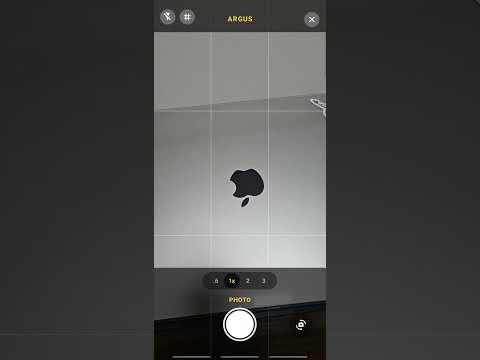 Argus Demo Marketplace capture proof in motion. A short demo of the eBay-style listing flow: capture inside the app, produce a proof receipt, and surface trusted status. Watch demo
 Why ARGUS exists
Platforms increasingly rely on photo evidence for listings, claims, returns, rentals, inspections, and disputes. Generative tools make it easier to submit images that look real but never came from the claimed capture context.
ARGUS moves the decision earlier. Instead of guessing whether pixels are fake after upload, a platform can require a verifiable capture path before a photo receives trusted status.
How it works
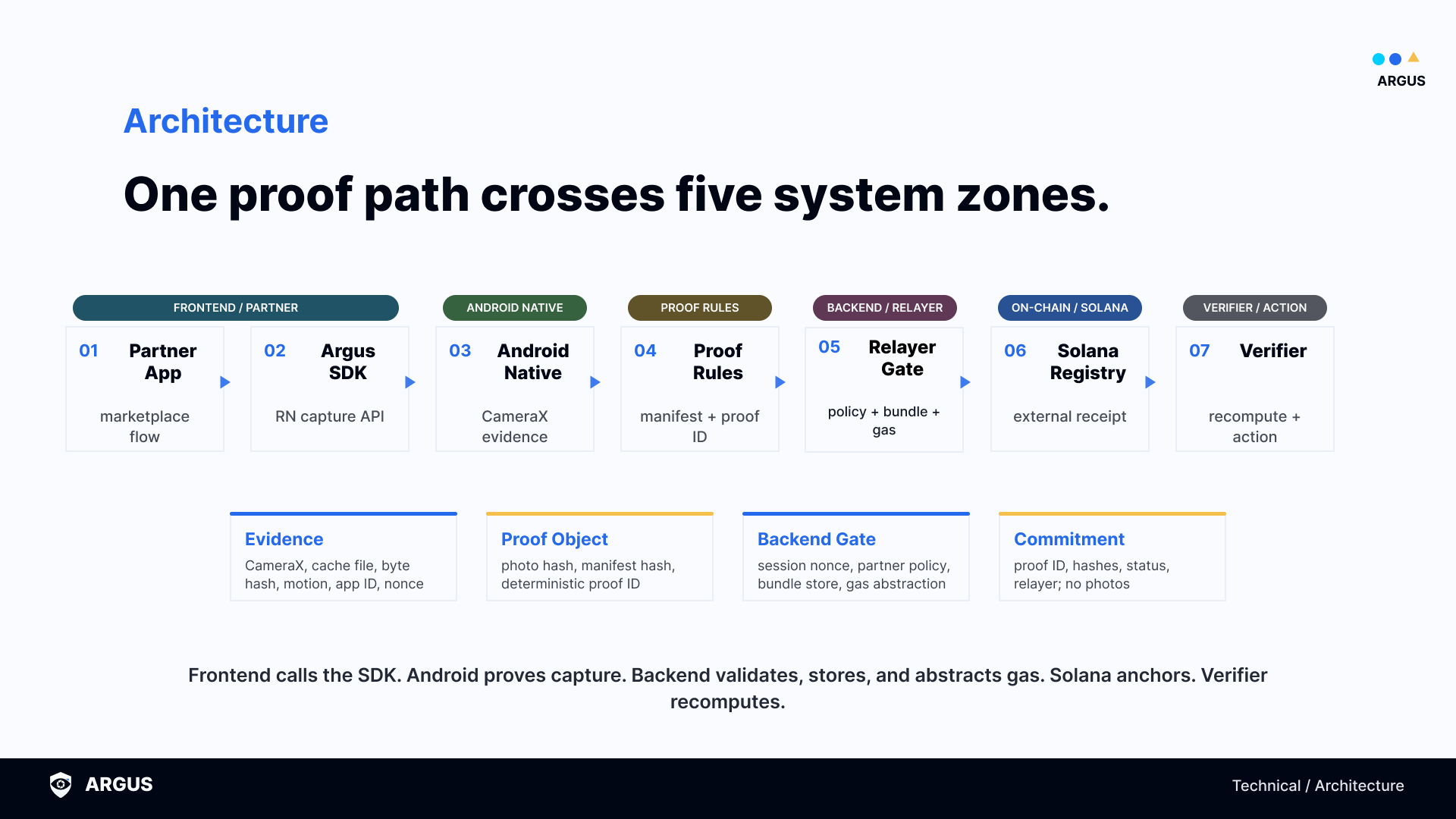
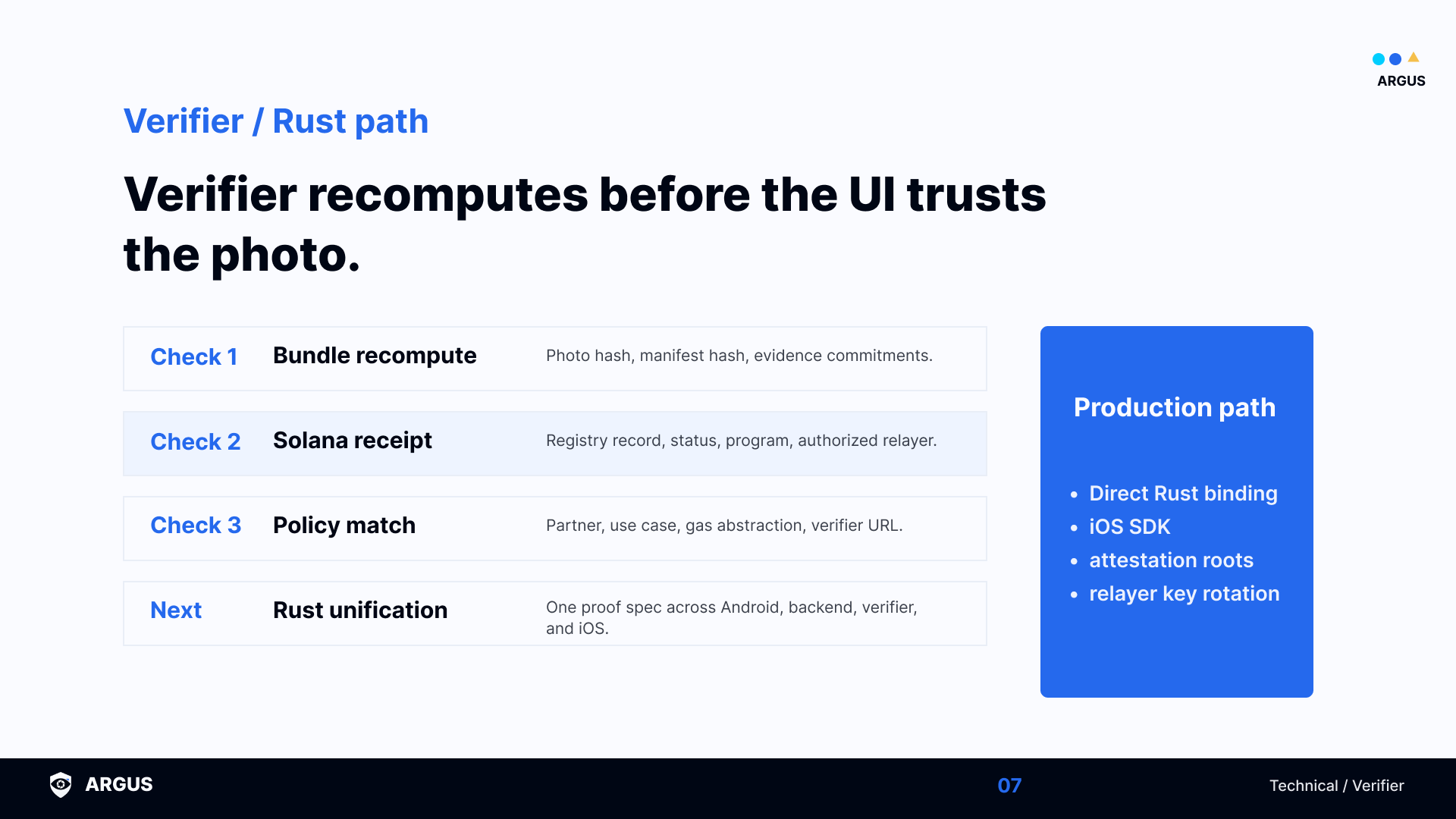
The relayer is the pre-registration gatekeeper. Solana is the public commitment layer. The verifier recomputes the proof bundle before a platform acts.
A platform routes photo evidence through the ARGUS SDK instead of ordinary upload.
Android CameraX capture, app identity, motion context, session nonce, and byte hashes travel in one proof bundle.
The relayer checks partner, use case, app identity, manifest, image bytes, evidence JSON, and proof IDs before registration.
Solana stores compact commitments from an authorized relayer. Photos and raw evidence stay offchain.
The verifier recomputes the bundle before a badge, retake, downgrade, rejection, or review decision.
SDK surface
ARGUS is an SDK because photo fraud enters through existing upload flows. The current reference path is React Native with Android native capture.
import {
  ArgusBadge,
  ArgusCamera,
  ArgusProofLink,
  ArgusProofSummary,
  configure,
} from "@argus/rn-sdk";

configure({
  partnerId: "your-partner-id",
  relayerUrl: "https://your-argus-relayer.example",
  verifierBaseUrl: "https://verify.argus.dev",
});

<ArgusCamera
  partnerId="your-partner-id"
  useCase="marketplace_listing"
  metadata={{ listingId: "listing-123" }}
  onProofCreated={setProof}
  onError={console.error}
/>;

<ArgusBadge proof={proof} />;
<ArgusProofSummary proof={proof} />;
<ArgusProofLink proof={proof} onOpen={openUrl} />;
Trust model
A production Verified Capture claim requires matching photo bytes, manifest, evidence commitments, partner policy, authorized relayer, active registry status, and sponsored gas binding.
ARGUS verifies capture-path provenance. It does not prove scene truth, item existence, seller ownership, authenticity, condition, legal validity, user intent, or camera-sensor-signed pixels.
Read security statement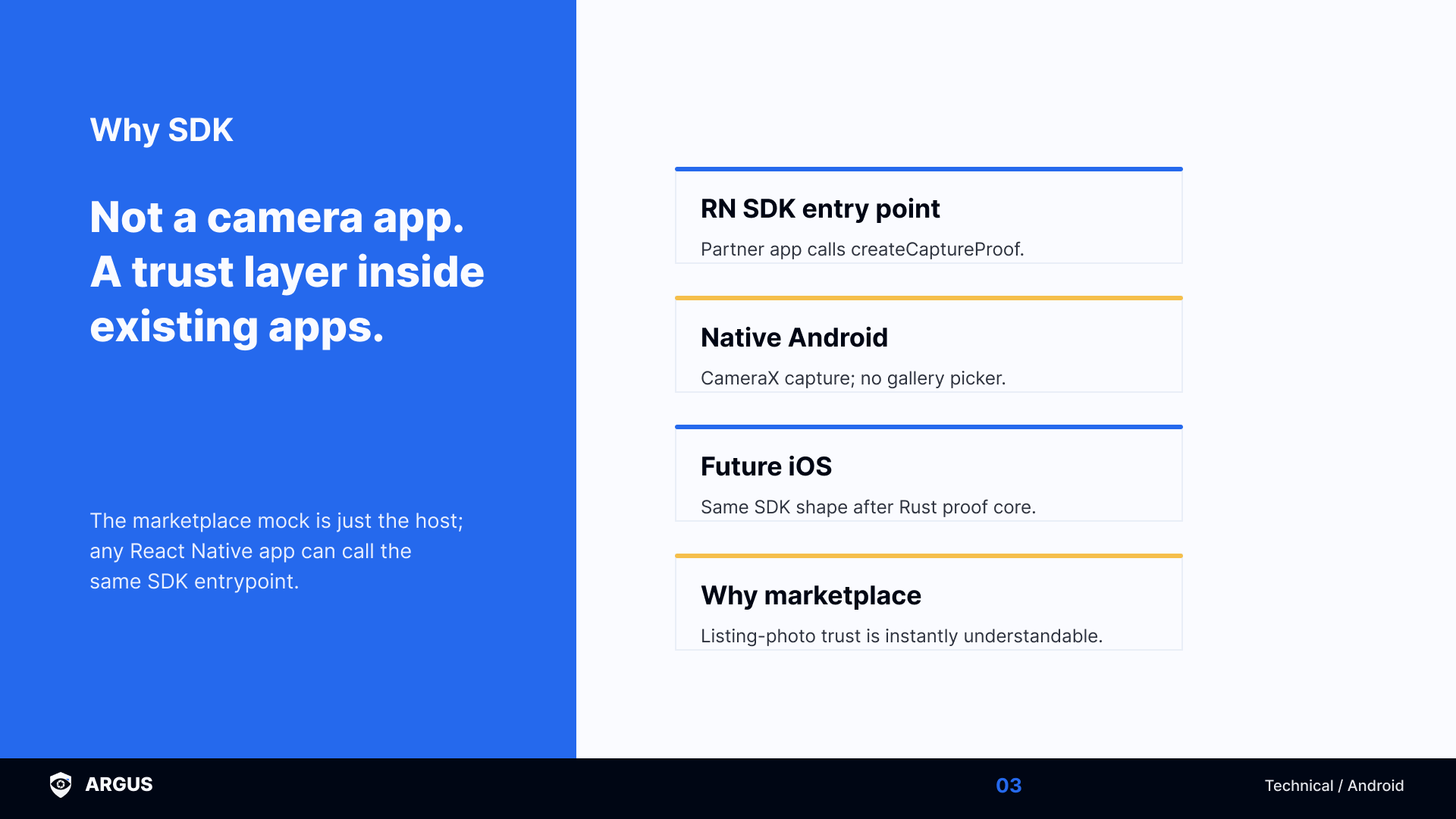
Evidence levels
Local, browser, simulator, or preview recomputation only. No production badge.
Native Android capture evidence plus registry, relayer, partner policy, and sponsored gas binding.
Level 2 plus verifier-validated Android Keystore signature over the proof binding.
Level 3 plus Android Key Attestation chain, nonce challenge, TEE or StrongBox signal, and configured trusted root validation.
Marketplace wedge
Marketplace listings are the first easy-to-understand example: listing details, native capture, then a capture receipt with trusted status and a Solana scan. The same capture-commitment primitive can extend to other evidence-heavy workflows.
Current status
The repository includes the React Native SDK, Android native capture path, Rust proof core, relayer validation, Solana registry program, and marketplace demo. Local, browser, simulator, mock, and devnet runs should be labeled preview or integration demo unless the full production trust root is present.
Production acceptance requires the real Android capture path, required evidence commitments, trusted attestation roots when claimed, the production-pinned registry program, authorized relayer fee payer, active registry record, sponsored gas binding, and allowlisted partner policy.

Official links